What Is “Aft Rigging”?
In sailing terminology, “aft rigging” refers to all rigging components located toward the rear (aft) section of a vessel, particularly those associated with controlling the mast, sails, and spars from the midpoint of the boat back to the stern. While the term isn’t always used as a strict technical classification in the same way as “standing rigging” or “running rigging,” it’s commonly understood in practical seamanship to describe the subset of rigging systems that operate or are anchored aft of the mast.
To fully understand aft rigging, it helps to place it within the broader rigging system of a sailboat.
The Bigger Picture: Standing vs Running Rigging
A sailboat’s rigging is generally divided into two major categories:
- Standing rigging: Fixed lines, wires, or rods that support the mast (e.g., shrouds, forestay, backstay).
- Running rigging: Movable lines used to control sails and spars (e.g., halyards, sheets, control lines).
“Aft rigging” can include elements from both categories, as long as they are positioned toward the stern or function from that area.
Core Components of Aft Rigging
1. Backstay (Primary Aft Standing Rigging)
The backstay is one of the most critical elements of aft rigging.
- It runs from the top of the mast (masthead or fractional point) down to the stern. In this article, we will focus on the latter in order to shape our main sail.
- Provides rearward support to counteract the forward pull of the forestay.
- Helps maintain proper mast bend and tension.
Modern boats often include adjustable backstays, allowing sailors to fine-tune sail shape and mast curvature under different wind conditions.
2. Running Backstays and Checkstays
On more performance-oriented or traditional rigs:
- Running backstays: Adjustable lines attached high on the mast and led aft, used to stabilise the mast when sailing off the wind.
- Checkstays: Lower supports that help control mast bend in the midsection.
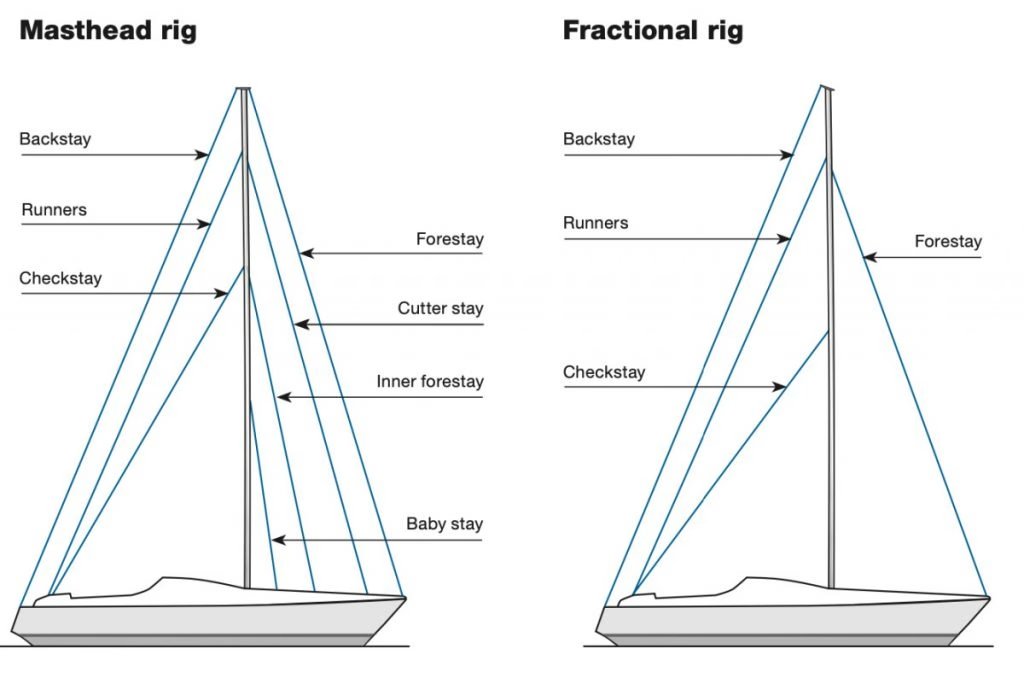
These are actively managed while sailing and are essential for certain rig types, such as cutter rigs or older gaff rigs.
3. Mainsheet System
The mainsheet is a key part of aft running rigging:
- Controls the angle of the mainsail boom relative to the boat.
- Often leads to blocks and a traveller system located in the cockpit or near the stern.
Depending on the boat design:
- It may be mid-boom sheeting (mounted forward)
- Or end-boom sheeting (mounted aft, more common on cruising yachts)
This system plays a major role in sail trim, power, and helm balance.
4. Boom Vang (Kicker)
Though attached near the base of the mast, the boom vang works in conjunction with aft rigging:
- Controls vertical movement of the boom.
- Maintains sail shape, especially when sailing downwind.
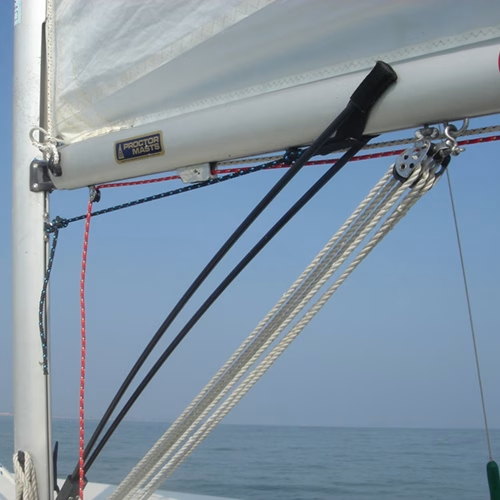
Its effects are most noticeable when trimming sails from the cockpit—an aft working area.
5. Traveller System
The traveller allows lateral adjustment of the boom:
- Usually mounted across the cockpit or just forward of the helm.
- Works with the mainsheet to fine-tune sail position.
Because it’s often positioned aft, it is typically considered part of aft rigging operations.
6. Aft-Led Control Lines
Modern sailboats frequently lead multiple control lines aft to the cockpit for safety and efficiency:
- Halyards (for raising sails)
- Reefing lines
- Outhauls and cunninghams
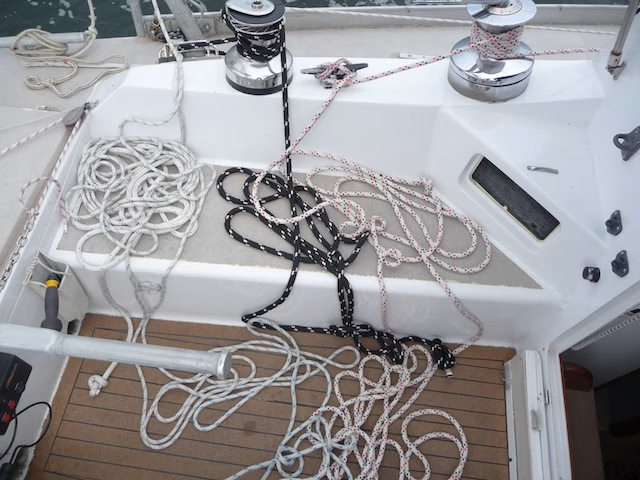
While these lines originate forward (at the mast), their working ends are aft, making them part of the functional aft rigging system.
Functional Role of Aft Rigging
Aft rigging is crucial for several reasons:
1. Sail Control from the Cockpit
One of the biggest evolutions in yacht design is the ability to manage sails without leaving the cockpit. Aft rigging enables:
- Safer single-handed sailing
- Reduced the need to go forward in rough conditions
- Centralised control of sail trim
2. Mast Stability and Shape
Elements like the backstay and checkstays:
- Maintain mast alignment
- Control mast bend
- Influence sail shape and efficiency
3. Performance Optimisation
Fine adjustments made through aft rigging directly affect:
- Boat speed
- Balance and helm feel
- Pointing ability (sailing upwind)
Aft Rigging in Different Rig Types
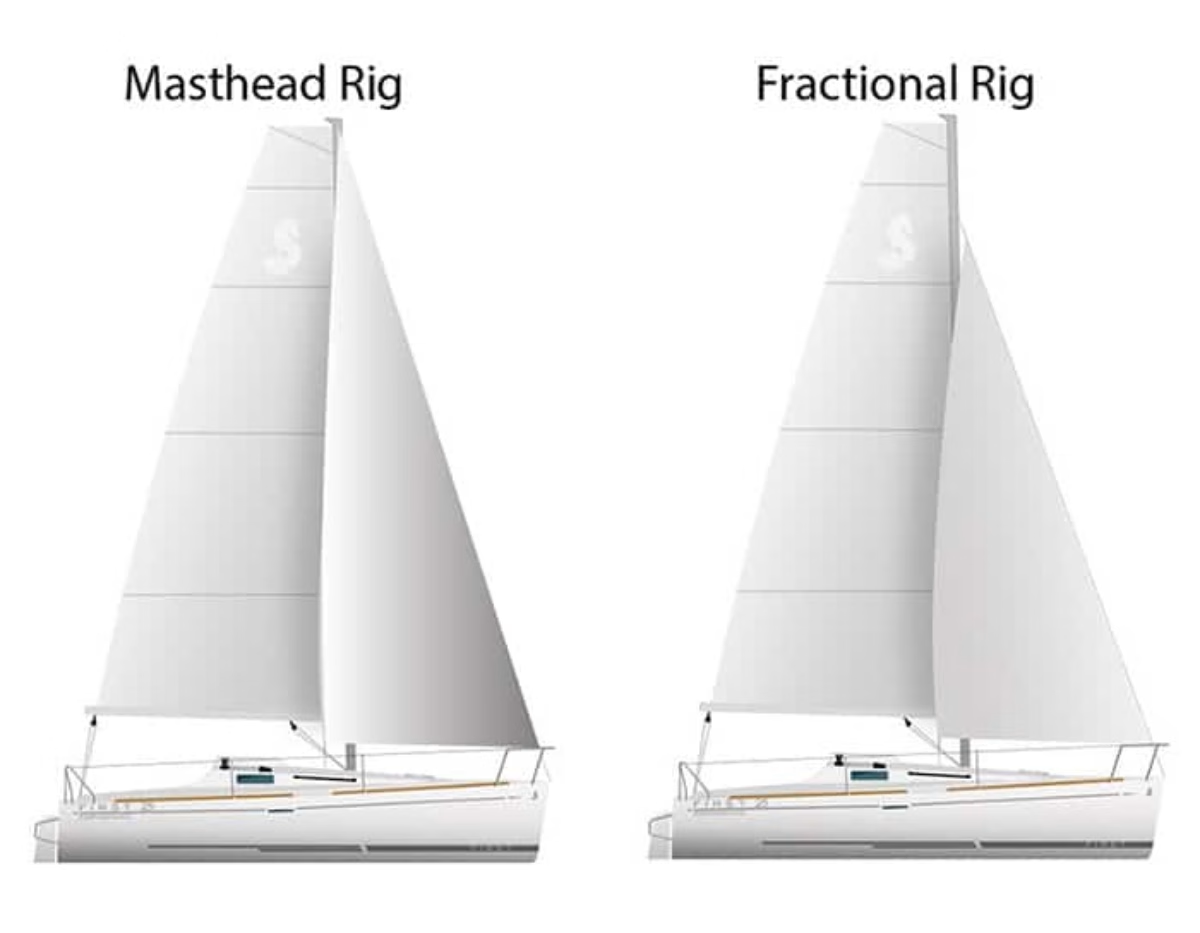
Masthead Rig
- Prominent backstay with strong tension
- Less reliance on running backstays
Fractional Rig
- The adjustable backstay plays a major role in mast bend
- Often paired with advanced sail controls led aft
Traditional and Gaff Rigs
- More complex aft rigging systems
- Use of multiple running backstays and topping lifts
Materials and Modern Developments
Aft rigging components have evolved significantly:
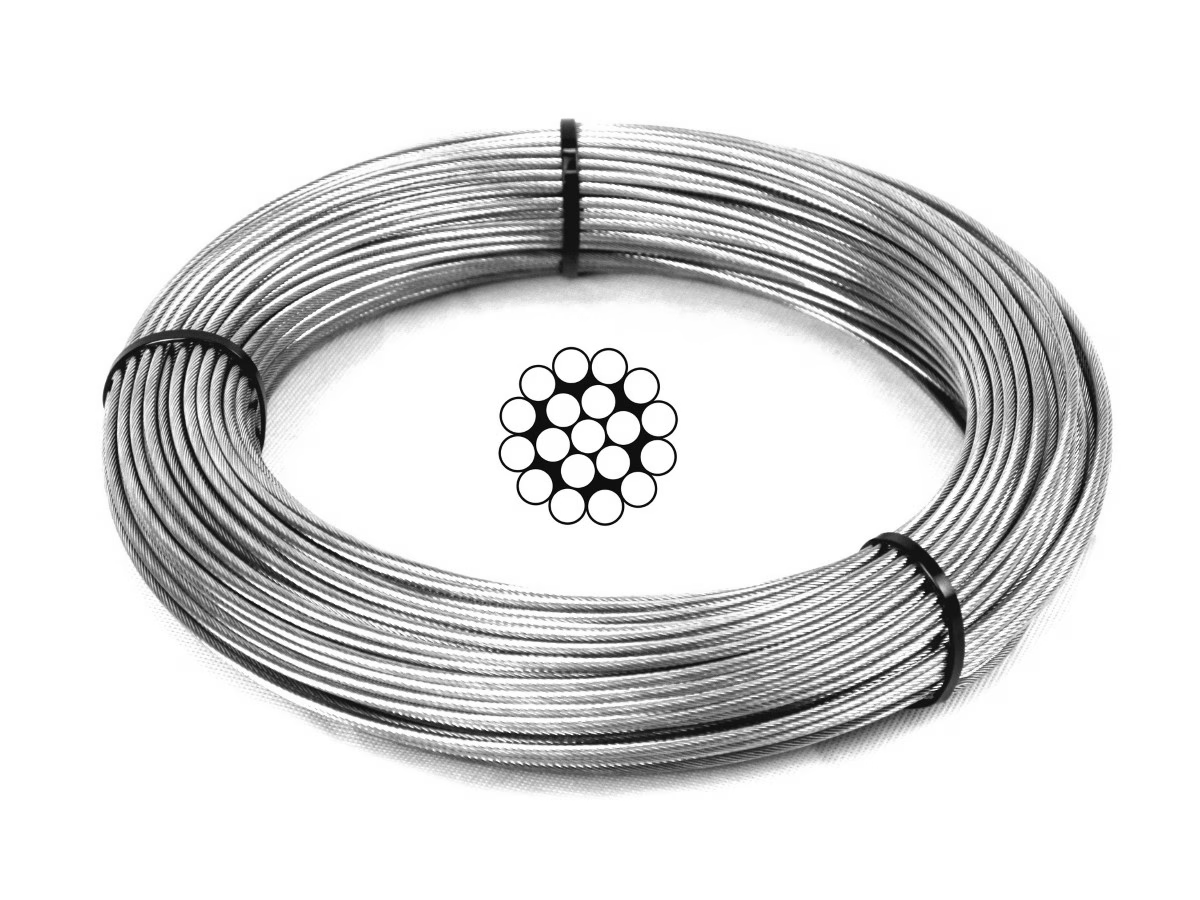
- Stainless steel wire → traditional standing rigging
- Rod rigging → higher performance, less stretch
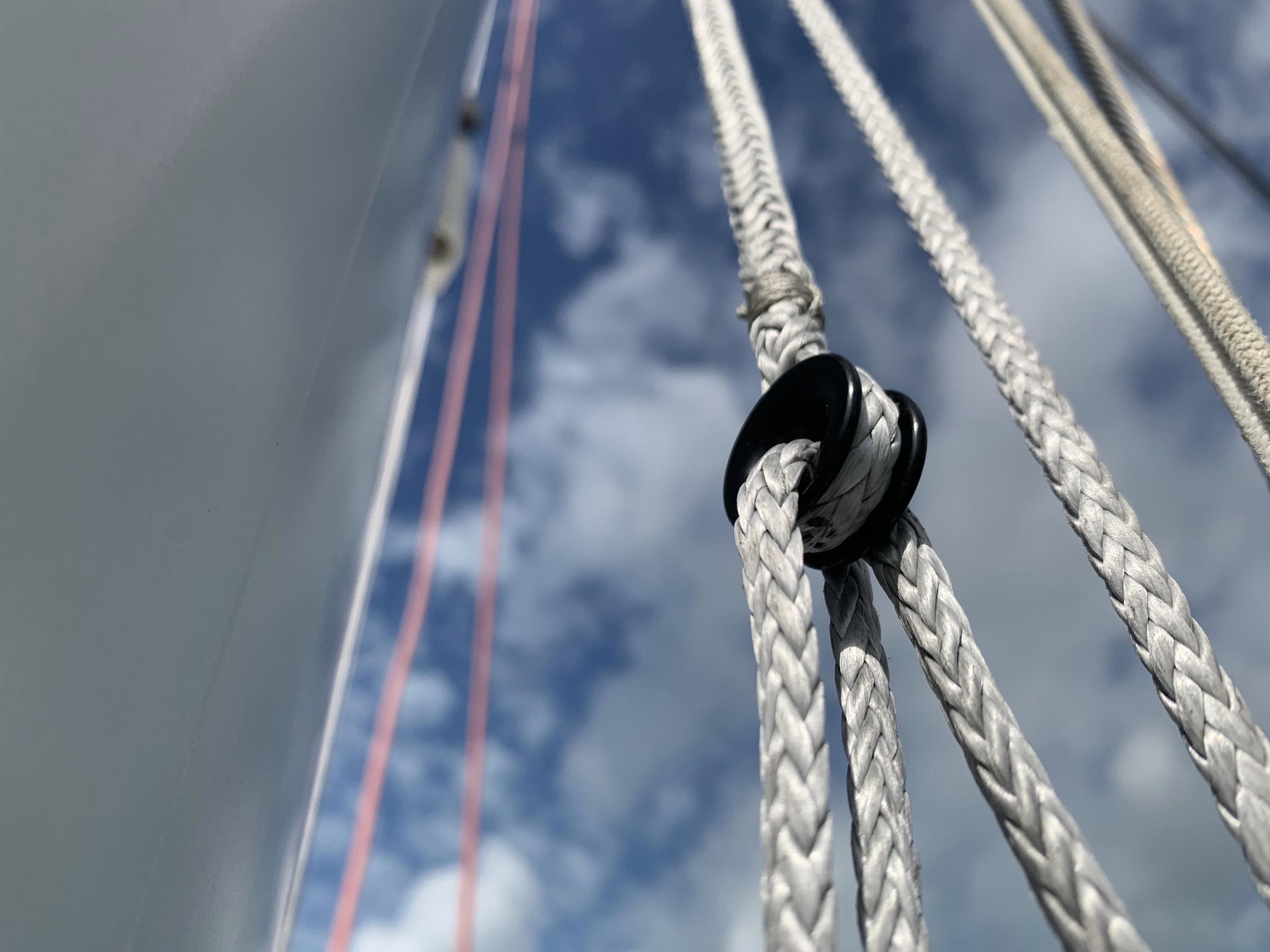
- Synthetic fibres (e.g., Dyneema) → lightweight, strong, increasingly popular
Blocks, clutches, and winches located aft have also improved, allowing:
- Greater mechanical advantage
- Easier handling under load
- Compact cockpit layouts
Practical Seamanship Considerations
When working with aft rigging:
- Always monitor line tension to avoid overload or failure
- Keep systems well-maintained (blocks, winches, clutches)
- Be aware of snap-back zones under load
- Practice coordinated adjustments, especially with running backstays
In Summary
“Aft rigging” isn’t a rigid technical classification but rather a practical, location-based concept describing the rigging systems that operate from or are anchored toward the stern of a sailboat. It includes critical components like the backstay, mainsheet, and aft-led control lines, all of which contribute to sail control, mast stability, and safe operation from the cockpit.
For sailors—especially those preparing for offshore passages or solo sailing—understanding aft rigging is essential. It represents the intersection of control, safety, and performance, all managed from the most secure working area of the boat: the cockpit.
In racing, a fractional rig gives you optimal performance, allowing you to “bend” the mast to create the most efficient sail shape.