Understanding Headsail Configuration
Among sailors, few topics generate as much practical debate as headsail configurations. The terms cutter, slutter, and solent rig are often used interchangeably in casual conversation, but they describe distinctly different approaches to managing multiple headsails on a single mast. Each system reflects a balance between performance, sail handling, and offshore practicality, and understanding their differences is especially valuable for anyone preparing for passagemaking or short-handed sailing.
Cutter Rig
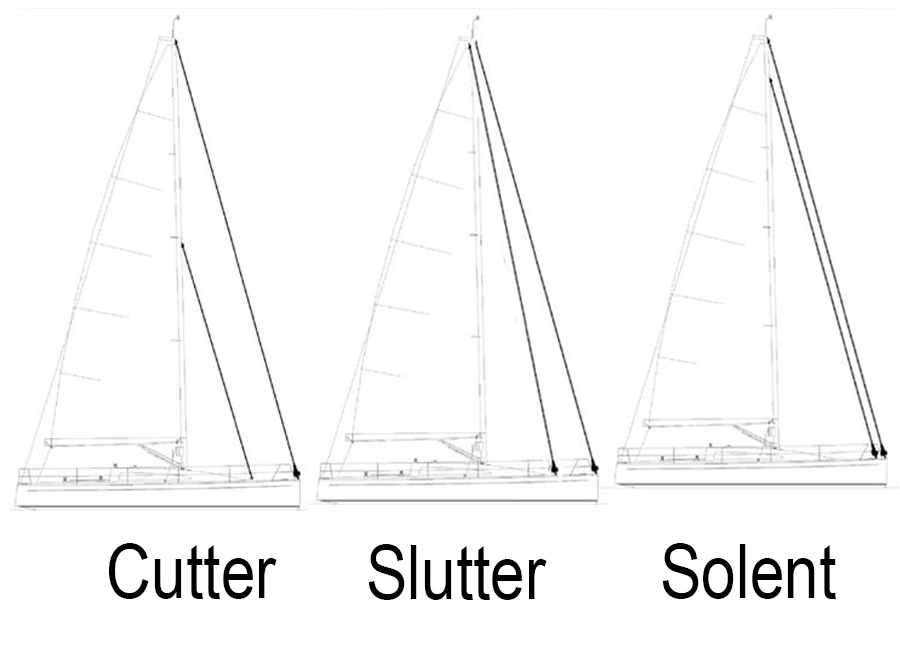
A traditional cutter rig is the oldest and most clearly defined of the three. It features a single mast with two headsails set on separate stays: a forward forestay carrying the jib or genoa, and a second, inner stay—commonly called a staysail stay—set further aft. This inner stay is usually permanently rigged and attached lower on the mast than the forestay, creating a distinctive sail plan that allows the boat to fly both a large headsail and a smaller staysail simultaneously.
The cutter’s strength lies in its versatility. In moderate conditions, the combination of two headsails provides balanced power and improved airflow between sails, enhancing efficiency. As conditions worsen, the outer headsail can be reduced or removed entirely, leaving a manageable staysail and reefed mainsail that keeps the boat moving safely and comfortably.
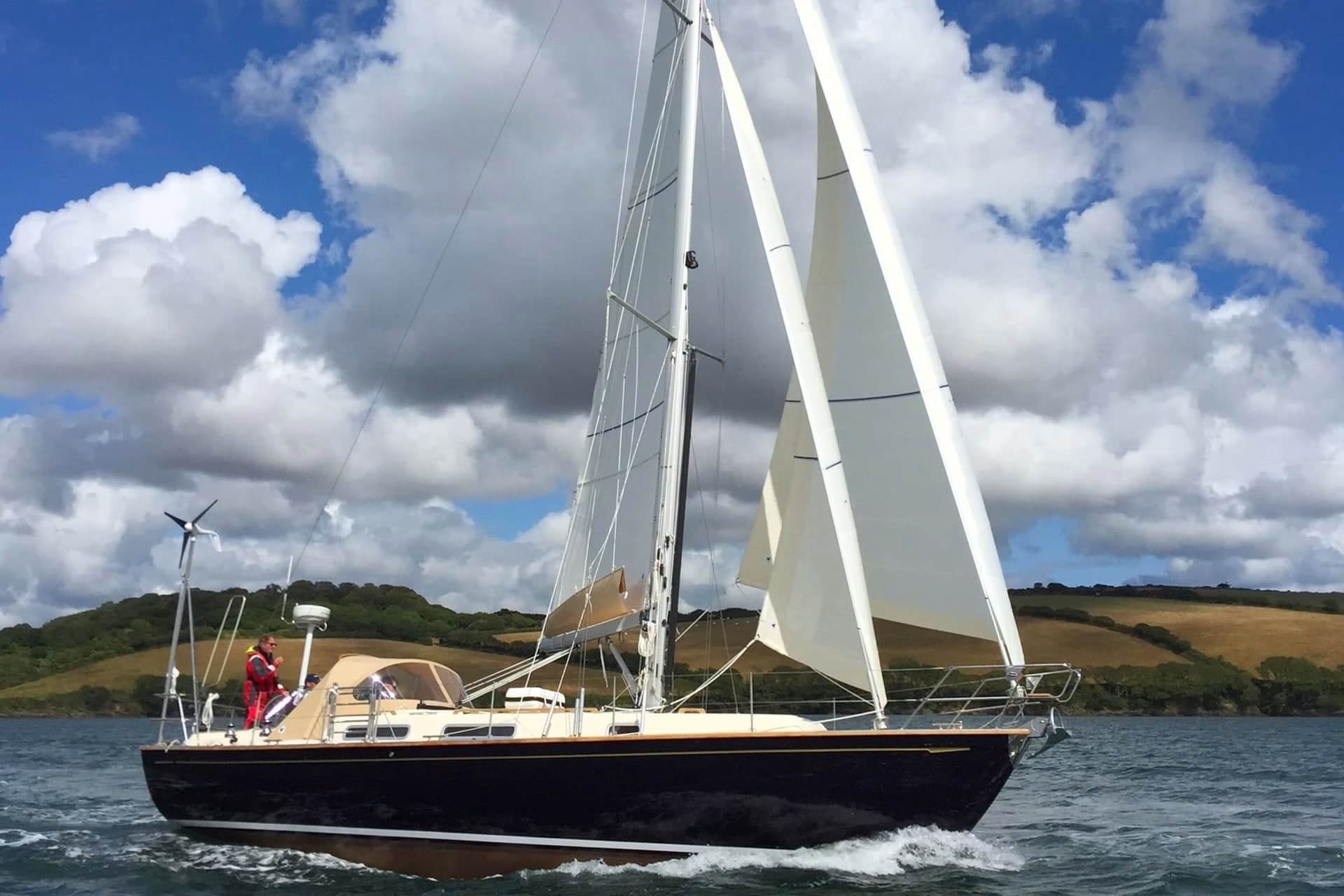
The cutter rig’s geometry also contributes to its offshore reputation. Because the inner stay is permanently in place, it provides structural support to the mast and accommodates a dedicated heavy-weather sail without reconfiguration.
However, this comes at a cost. The presence of a fixed inner stay can complicate tacking, particularly when using large overlapping genoas, and it introduces additional rigging complexity on deck. For sailors prioritising robustness and heavy-weather capability over simplicity, the cutter remains a trusted choice.
A cutter-rigged yacht exudes visual authority that immediately conveys purpose and experience. The presence of a staysail set well aft of the headsail, combined with the geometry of dual forestays, gives the rig a layered, deliberate look—nothing about it feels accidental or purely aesthetic.
Instead, it reflects a design shaped by generations of offshore sailing, where balance, redundancy, and control mattered more than simplicity. To many sailors, that complexity signals competence: a boat set up to handle changing conditions without hesitation. The slightly busier foredeck, the tighter sail plan, and the ability to carry multiple working sails all contribute to an impression of preparedness and discipline. In that sense, a cutter rig doesn’t just look good—it looks capable, and that capability is what conveys a deeper sense of thorough seamanship.
Slutter Rig
The term “slutter,” a blend of “sloop” and “cutter,” emerged more recently and reflects a hybrid approach rather than a formal rig type. A slutter typically resembles a sloop under normal conditions, with a single headsail set on the forestay, but includes a removable or temporary inner forestay that can be deployed when needed. This inner stay is often stored or lashed out of the way when not in use, preserving the clean foretriangle and easy sail handling of a standard sloop. When conditions call for it—such as during offshore passages or heavy weather—the stay is rigged into position, allowing a staysail or storm jib to be set closer to the mast.
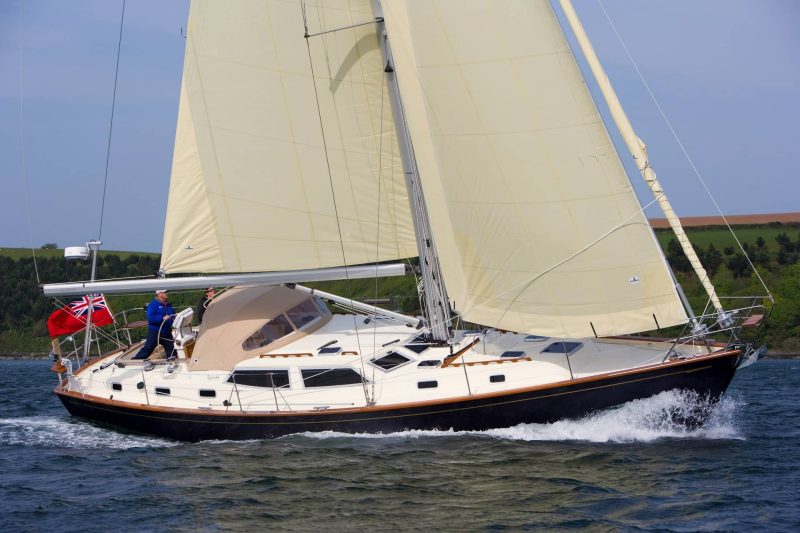
What distinguishes the slutter is its adaptability. It avoids the day-to-day inconvenience of a permanent inner stay while still offering the option of a second headsail for offshore work. The trade-off is that deploying the inner stay can require preparation and sometimes compromises, such as attaching it to a reinforced deck fitting or tensioning it with tackles rather than turnbuckles. In essence, the slutter is a pragmatic solution for modern cruising sailors who want flexibility without committing to the full complexity of a cutter rig.
Solent Rig
The Solent rig, named after the Solent region off the south coast of England, where it became popular in racing circles, represents a more performance-oriented evolution. At first glance, it resembles a cutter because it also uses two forestays. The crucial difference lies in their placement. In a Solent rig, the inner stay is positioned very close to the primary forestay—often only a short distance aft—and attaches at or near the same height on the mast. This means that, unlike a cutter, the Solent rig is not designed to fly two headsails efficiently simultaneously. Instead, it allows for rapid interchange between different headsails depending on conditions.
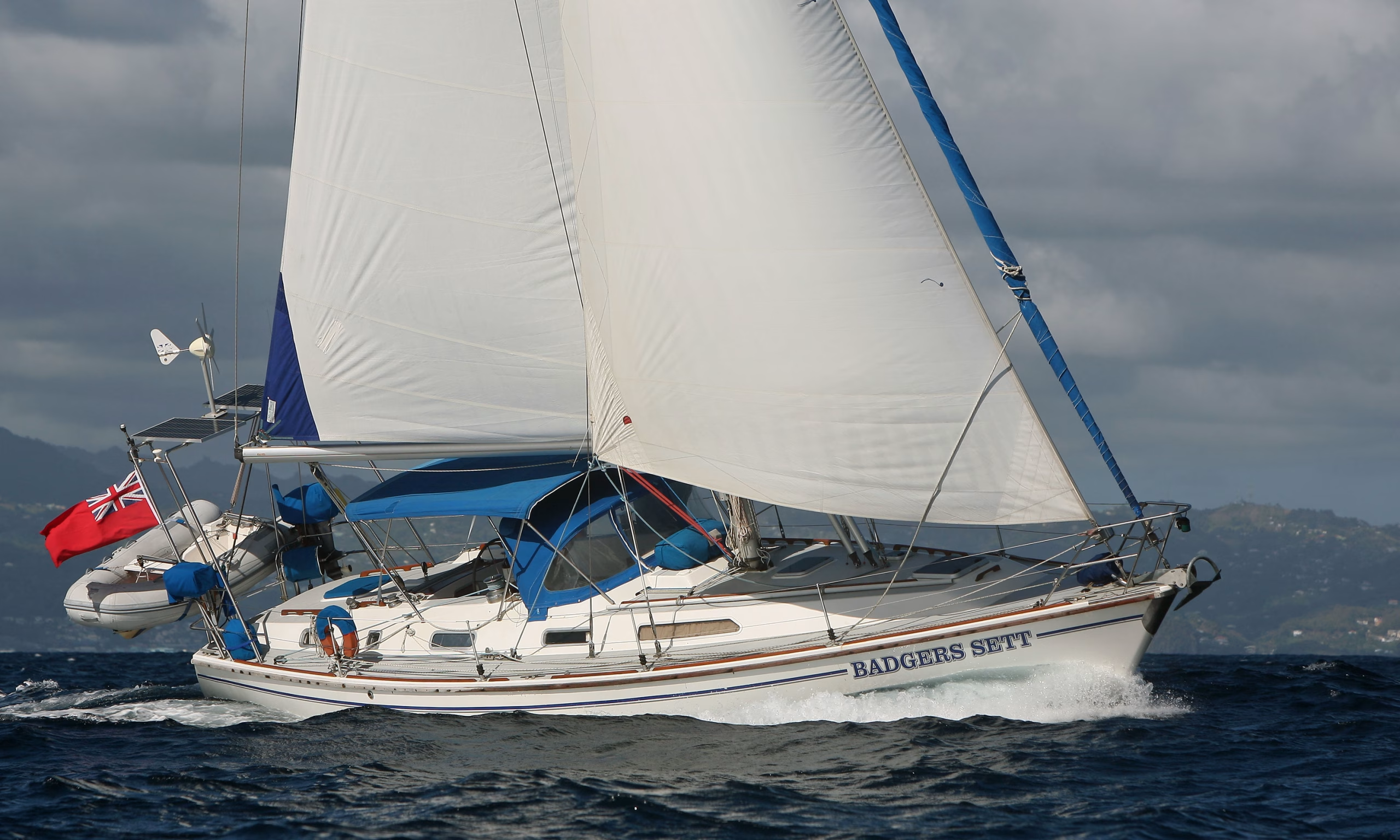
The defining advantage of the Solent rig is its ability to switch quickly between a large genoa and a smaller, heavy-weather jib without removing sails or relying on furling systems alone. Racers value this because it enables precise sail selection as wind strength changes, while offshore sailors appreciate the ability to set a dedicated storm sail on a separate stay without disturbing the primary headsail setup. Because the stays are close together, sail shape remains efficient, and the deck layout is typically less cluttered than on a traditional cutter. However, the Solent rig does not provide the same balanced two-sail configuration that makes cutters so effective when sailing under reduced canvas.
Comparing the three systems reveals that they are less about strict categories and more about design priorities. The cutter emphasises redundancy, balance, and heavy-weather capability, making it a favourite for bluewater cruising. The slutter prioritises flexibility, allowing sailors to shift between simple and complex configurations as needed. The Solent rig focuses on performance and adaptability, particularly in situations where quick sail changes are more valuable than carrying multiple headsails at once.
In practice, the choice between these configurations often depends on how a boat is used. A long-distance cruiser facing variable and sometimes severe conditions may lean toward a cutter or slutter for their ability to carry a dedicated staysail. A performance-oriented sailor or racer may prefer the Solent rig for its efficiency and ease of headsail changes. Meanwhile, many modern cruising yachts adopt slutter-like arrangements, quietly blending features of all three without strictly adhering to traditional definitions.
Ultimately, cutter, slutter, and Solent rigs represent different answers to the same fundamental challenge: how to manage headsail area effectively across a wide range of conditions. Each system has its own logic, strengths, and compromises, and understanding those nuances allows sailors to choose—or adapt—the rig that best matches their sailing style and ambitions.