When sailing internationally, vessels are expected to fly certain flags based on their registry, ownership, and status. Here’s a breakdown of the key flags and their meanings:
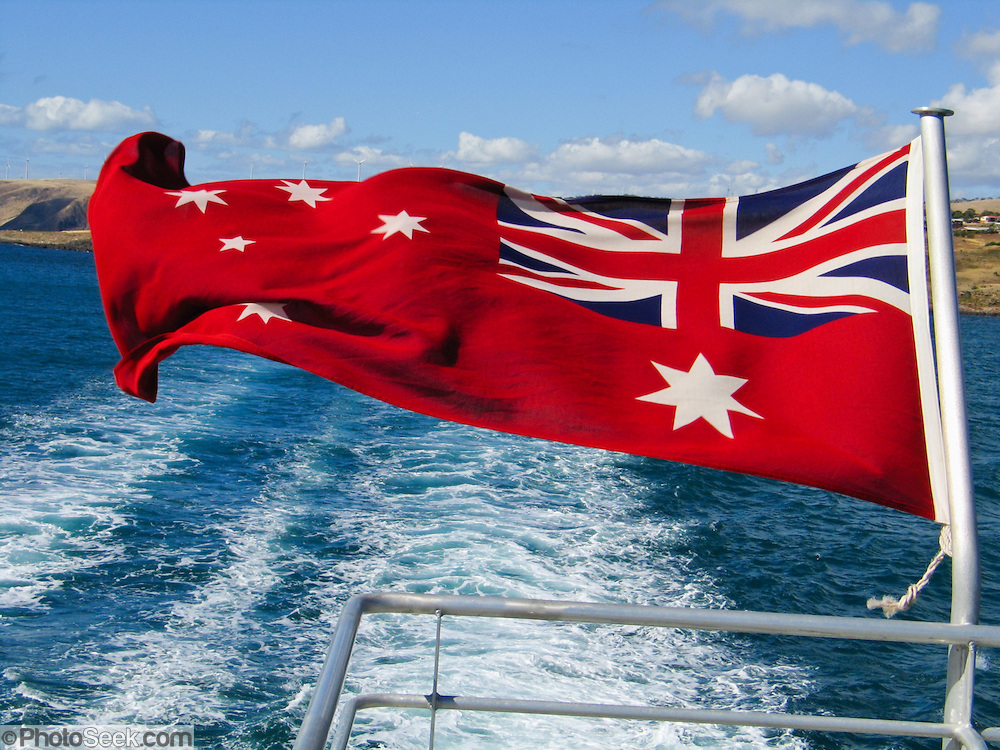
1. National (Ensign) Flag – “Ship’s Flag”
- This is the primary flag that identifies the vessel’s country of registration (also called the “flag state”).
- It must be flown at the stern (back) of the boat.
- Required in most territorial waters and while entering/leaving ports.
- Different countries have specific maritime ensigns.
- Read about the history of blue vs red ensign…
2. Courtesy Flag – “Visiting Country’s Flag”
- Flown on the starboard spreader of a sailboat or on a mast/hardtop for powerboats.
- Signals respect to the country whose waters you’re in.
- Hoisted after clearing customs and replacing the quarantine flag (“Q” flag).
- Must be in good condition—a tattered flag can be seen as disrespectful.
- Read more about courtesy flags.
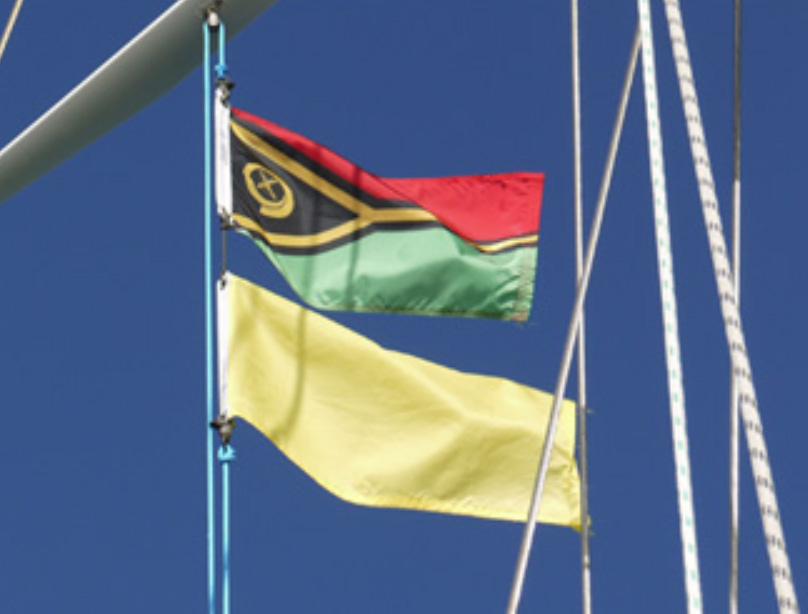
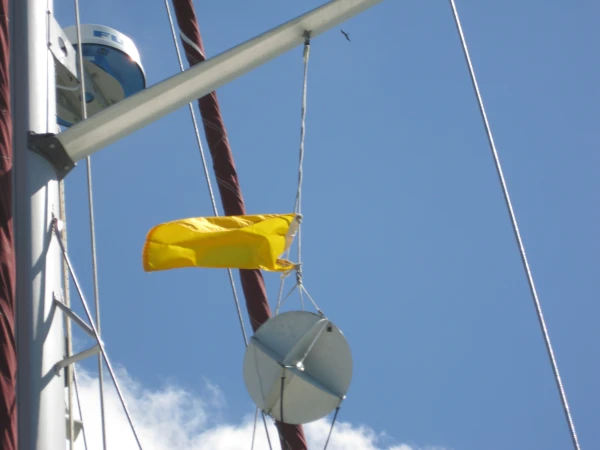
3. Quarantine Flag (“Q” Flag) – Entering a New Country
- A solid yellow flag, indicating the boat has not yet cleared customs and immigration.
- Flown at the starboard spreader before entering port.
- Replaced by the courtesy flag once clearance is granted.
4. Owner’s or Private Signal Flag
- Some yacht owners have personal house flags or private signals, flown from the mainmast or bow staff.
- Often used in yacht clubs or by distinguished owners.
- Not required but adds a personal touch to a vessel.
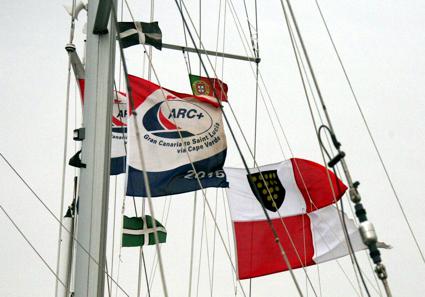
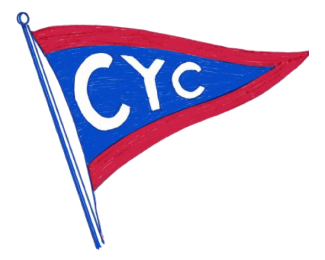
5. Club or Association Burgee
- Small triangular flags that show yacht club membership.
- Flown from the masthead or bow staff.
- Not required, but a tradition among sailors.
6. Racing Flags
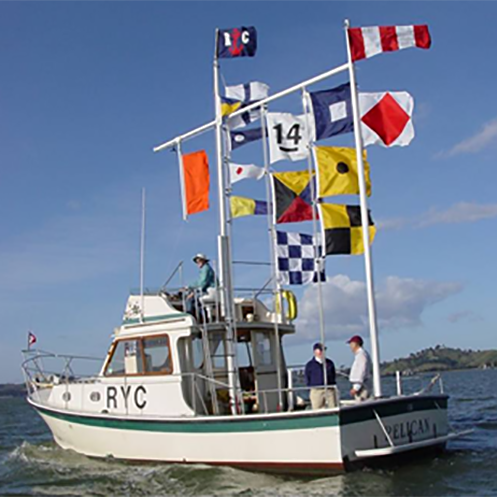
- Special pennants are flown when participating in regattas or official races.
- Each event has its own flag rules.
Flag Etiquette & Rules
- The national ensign should be the largest and most prominent.
- Flags should be taken down at sunset unless the boat is underway.
- Tattered or dirty flags should be replaced.
- Never fly a courtesy flag higher than your national ensign.
As an aside, a ship ‘wears’ the flag, whereas the owner of the ship ‘flies’ the flag. Also, rather than saying ‘raising’ the colours, one says the colours are ‘made’.