1. Why Special Attention is Needed
Firstly, if you need to know more about antifouling your boat, then read this article first:
The Complete Guide to Antifouling for SailboatsProps and shafts are typically metal (bronze, stainless steel, or aluminium).
They spin at high speed, and fouling not only causes drag but also imbalance and vibration.
Regular hull antifoul paint often fails to adhere properly to metals, especially on moving parts.
Cleaning Props and Shafts
Tools and Materials You’ll Need:
Plastic scraper or putty knife (avoid damaging the metal)
Medium to heavy-duty Scotch-Brite pads or bronze wool
Fine sandpaper (around 80–120 grit if needed)
Pressure washer (optional, for heavy fouling)
Marine degreaser or solvent (like acetone)
Clean rags
Safety gloves and goggles
Steps to Clean:
Remove Loose Growth
Use the scraper to gently remove barnacles, algae, and any significant marine growth.Scour the Surface
Use a Scotch-Brite pad or bronze wool to scrub off biofilm, slime, and residue. If it’s tough, light sanding might be needed.Degrease Thoroughly
Wipe down the cleaned metal with acetone or a marine degreaser to remove oils and prepare it for coating.Inspect for Damage
Check for pitting, corrosion, cracks, or damage to the prop or shaft. This is a good time to identify and address problems before they escalate.
Antifouling Props and Shafts
Because these parts spin and flex under load, standard hull antifoul paint is not suitable. Instead, you have two main options:
Option 1: Propeller-Specific Coating Systems
These are multi-step products specially designed for props and shafts.
Popular Systems Include:
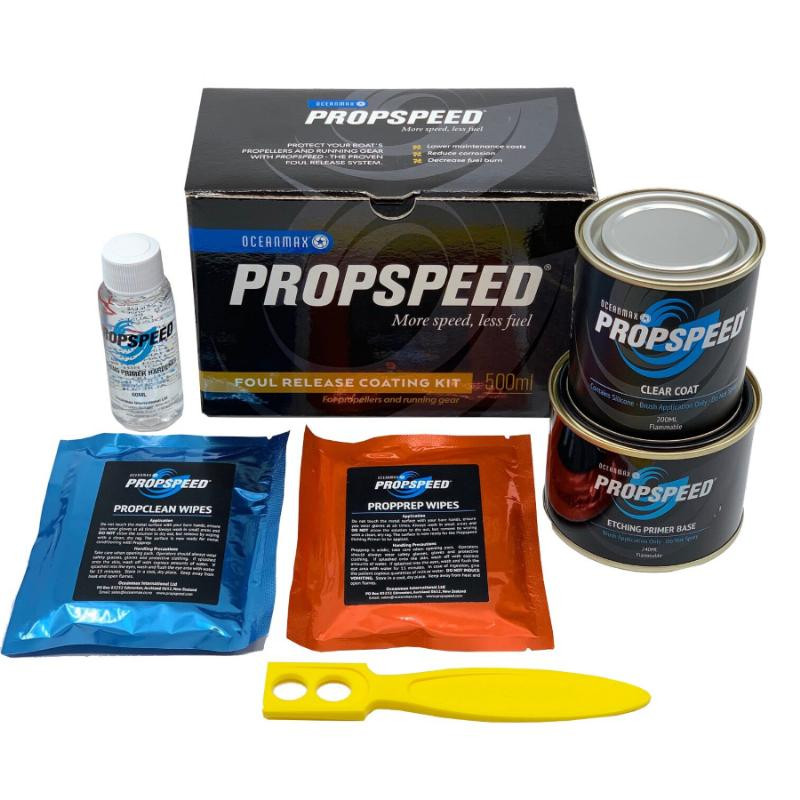
Propspeed (very well-known)
Expensive – about $250 for one prop (perhaps two). Propspeed is widely available in most boating shops or chandleries. It is the most used solution for foul-release coating in Australia.
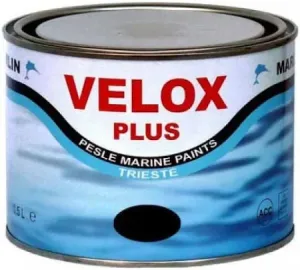
Velox Plus
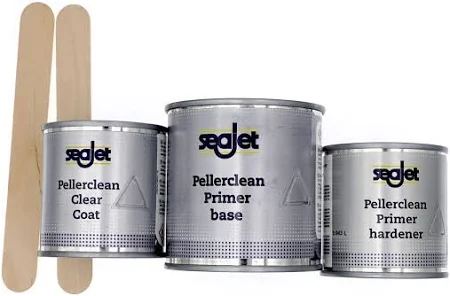
PellerClean
Typical Application Steps:
Always follow the manufacturer’s instructions!
Etch Primer
After cleaning, apply a metal-etching primer designed for underwater metals. This creates strong adhesion.Tie Coat or Adhesion Coat
Some systems use a second layer to ensure the final coating sticks properly.Topcoat (Foul-Release Coating)
The final layer is slick and prevents marine growth from attaching. Propspeed, for example, leaves a rubbery finish that is extremely slick but non-toxic.
Important: These coatings don’t kill growth with biocides — they prevent attachment by being too slick.
Option 2: Hard Antifoul Paint for Metal
If a prop-specific coating is not an option, you can use a hard, copper-free antifouling paint made for metals.
Key things to do:
Apply an etch primer first.
Then apply the antifoul paint.
Some examples are Interlux Trilux 33 or Pettit Zinc Coat Barnacle Barrier.
It won’t be as slick as Propspeed, but it’s much cheaper and still offers good protection.
Key Tips for Success
Surface Preparation is Crucial — 90% of the success comes from how well you clean and degrease before coating.
Don’t Paint Sacrificial Anodes — Never coat your zinc anodes, or you’ll block their protective function.
Allow Proper Curing Time — Follow the manufacturer’s guidelines for curing time before launching the boat.
Annual Inspection — Even premium systems like Propspeed should be inspected yearly.
Quick Summary Table
| Step | Details |
|---|---|
| Clean | Scrape, scour, degrease |
| Prep | Sand lightly, clean with acetone |
| Prime | Apply metal etching primer |
| Coat | Use a foul-release or hard antifoul |
| Maintain | Inspect annually and touch up if needed |