The infamous “floating plastic island” most often refers to the Great Pacific Garbage Patch (GPGP) is a massive collection of marine debris made up primarily of plastic and is located in the North Pacific Ocean. Despite the nickname it’s not an actual island you could walk on but more like a thin soup of plastic particles and debris suspended throughout the water column, some visible and much of it microscopic.
Location

Situated between Hawaii and California in the North Pacific Subtropical Gyre, one of five major ocean gyres.
It’st’s not a single mass but a region where ocean currents concentrate floating debris.
Why It Forms Here
Ocean gyres are large systems of rotating currents.
In the North Pacific, the currents form a vortex that traps debris—like a giant, slow-moving whirlpool.
What is in It?
1. Plastics (roughly 80% of the total debris)
Microplastics: tiny plastic particles broken down from larger objects.
Macroplastics: larger items like bottles, crates, bags, straws, toothbrushes, fishing nets, etc.
2. Fishing Gear

Known as ghost nets—abandoned fishing nets that continue to trap marine life.
Makes up a significant portion (by weight) of the debris.
3. Consumer Goods
Items lost or dumped overboard: toothbrushes, toys, packaging, even shoes and lighters.
Size and Scale
Estimates vary, but it is twice the size of NSW (or larger than some countries, like France or Spain).
It contains trillions of plastic pieces, weighing 80,000 metric tons or more.
The plastic concentration can be up to 1.8 trillion pieces.
Environmental Impact
Marine Life
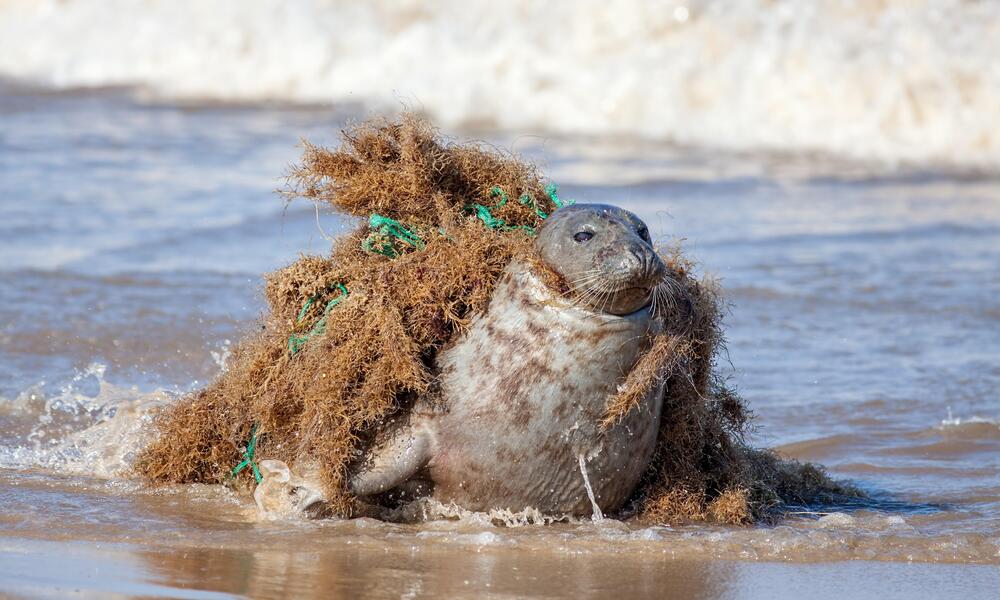
Animals ingest plastic thinkiit’st’s food—this can lead to internal blockages, starvation, or poisoning.
Sea turtles, seabirds (like albatrosses), fish, and whales are especially at risk.
Ghost nets entangle marine mammals and fish.
Ecosystem Disruption
Floating plastic serves as rafts for invasive species, altering the biodiversity of remote marine areas.
Microplastics have been found in the guts of many marine species, even in the deepest ocean trenches.
Microplastics: A Hidden Threat
Plastics break down very slowly, over decades to centuries.
Sunlight, waves, and salt degrade them into microplastics, which can enter the food chain.
Microplastics are now found in seafood, table salt, human blood and lungs.
Efforts to Clean It Up
1. The Ocean Cleanup Project
A Dutch non-profit aiming to remove plastics using large, passive collection systems.
They have deployed considerable floating barriers that collect debris as currents push it in.
2. Prevention on Land
Since most plastic enters the ocean from rivers and coastlines, organizations are also focusing on:
Reducing single-use plastics.
Improving waste management systems.
Educating the public about pollution.
Misconceptions
It’s not a solid island and not something you can see from space or walk on. It’s more like a plastic soup, with concentrations that vary in density.
Other Garbage Patches

There are five major oceanic garbage patches, one in each gyre:
North Pacific (the largest)
South Pacific
North Atlantic
South Atlantic
Indian Ocean